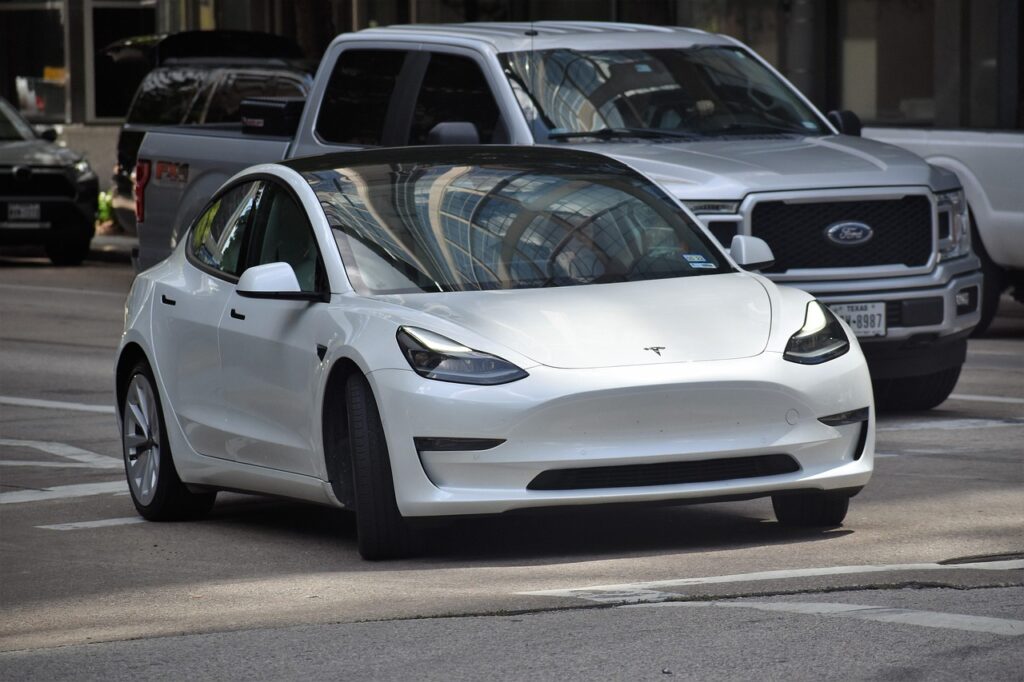
Buying an electric vehicle in 2026 doesn’t require learning new physics. It mostly requires recognizing something you already understand.
For the past decade, we’ve all learned how to live with battery-powered, software-driven devices. We charge them while we sleep. They update themselves quietly. And over time, they tend to get better, not worse.
An electric car works the same way—just on a larger scale. Once you see the parallels, most of the mystery around EVs disappears.
The Smartphone Comparison (At a Glance)
| Feature | Your Smartphone | Your Electric Car (EV) |
|---|---|---|
| Energy Storage | 128 GB (Gigabytes) | 75 kWh (Kilowatt-hours) |
| Refueling | Plug in while you sleep | Plug in while you sleep |
| Updates | iOS / Android updates | Over-the-Air (OTA) updates |
| Battery Life | Lasts all day | Lasts all week (for most drivers) |
| Performance Over Time | Improves with updates | Improves with software refinements |
| Maintenance | Rare, mostly software | Minimal, mostly tires & fluids |
This is the lens through which EVs make the most sense—not as exotic machines, but as familiar devices scaled up.
The 2026 Reality Check
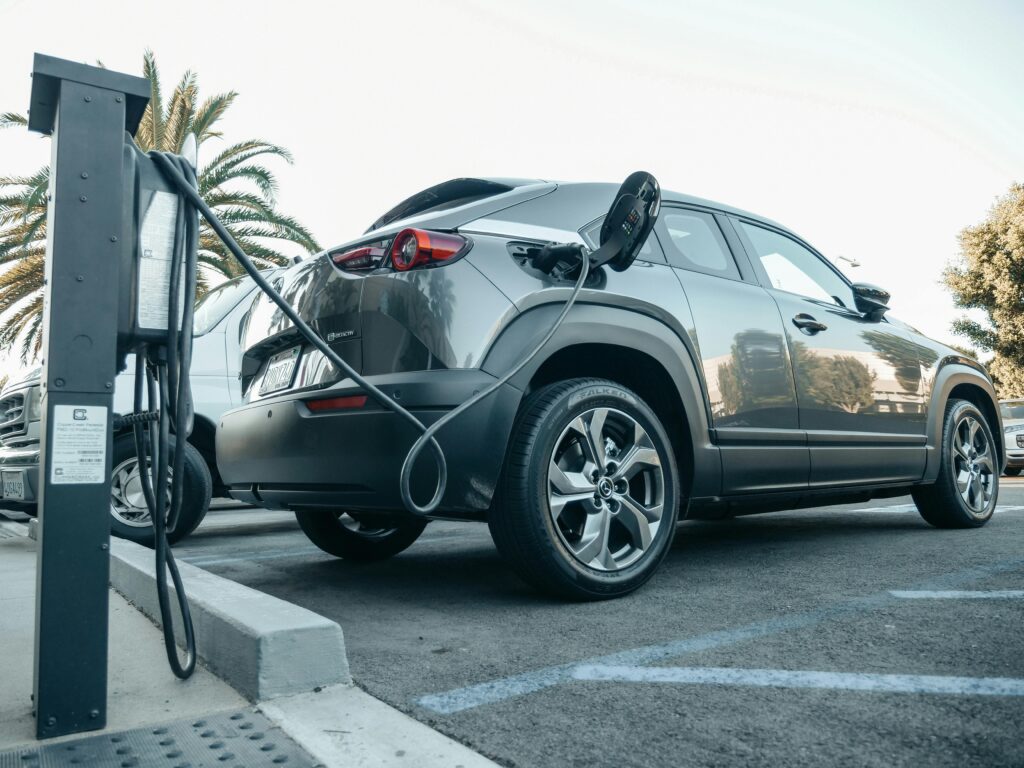
In 2026, there are more than 50 electric vehicle models on the road. SUVs, trucks, sedans—luxury and affordable. And yet, for many people, buying an EV still feels like it requires a PhD in engineering.
That feeling is understandable. New technology often sounds complicated before it becomes normal.
But here’s the reality: buying an EV today isn’t like buying a rocket ship. It’s like upgrading your phone.
If you know how to use an iPhone or an Android, you already understand most of what EV ownership feels like. The technology isn’t foreign—it’s familiar. We’ve just been taught to think about cars the old way.
1. The Battery: It’s Not a Fuel Tank, It’s a Power Bank
The biggest mental shift is how we “refuel.” We’re used to the Gas Station Mindset:
Wait until empty → Go somewhere special → Refill completely.
An EV battery works like your phone. You don’t wait until your phone hits 0% and then rush to a special building to charge it. You plug it in while you sleep and you wake up with a full (or nearly full) battery.
The Real Shift
Gas cars train you to think in emergencies—rush to refuel.
EVs train you to think in routines—small, invisible top-ups.
Here’s the part most people don’t realize: with gas cars, refueling is fast but disruptive. With EVs, charging is slow but invisible. That tradeoff turns out to matter more than people expect.
Jargon, Simplified
You’ll see the term kWh (kilowatt-hour) everywhere.
Think of it like this:
- kWh = Battery size
- Just like GB = Phone storage
A bigger number simply means more room for energy. Nothing more complicated than that.
2. Software: The Car That Gets Better While You Sleep
In the past, if your car’s screen was slow or the transmission felt clunky, it stayed that way forever. Your car was essentially frozen in time the day you bought it.
EVs are software-first. They receive Over-the-Air (OTA) updates just like your phone.
While you sleep, your car can:
- Improve braking or throttle behavior
- Fix dashboard glitches
- Add features like advanced climate modes or smarter navigation
In 2026, many owners report that their car actually drives better two years after they bought it.
Why gas cars could never do this is simple: they’re mostly mechanical. Once they leave the factory, their capabilities are largely locked in.
EVs, by contrast, are limited more by software imagination than hardware.
3. The “Universal Plug”: Charging Is Finally Simple
Remember when every phone had a different charger? Then USB‑C arrived, and suddenly everything just worked.
The EV industry has had a similar moment.
By 2026, most major brands in North America have adopted the NACS (Tesla-style) charging plug. For drivers, this means fewer compatibility worries and far less planning anxiety.
There’s a deeper benefit here: standards reduce risk. Once charging became standardized, buying an EV stopped feeling like betting on the wrong format.
Predictability matters—and it’s finally here.
4. Maintenance: Goodbye, Thousands of Moving Parts
A gas engine is a mechanical balancing act. It contains thousands of moving parts—pistons, valves, belts, and constant controlled explosions.
An EV motor has only a few dozen moving components.
What That Means for You
No:
- Oil changes
- Spark plugs
- Timing belts
- Mufflers
Your regular maintenance checklist becomes refreshingly short:
- Tires
- Windshield wiper fluid
- Cabin air filters
There’s also a quieter reliability shift most people don’t expect. EV issues tend to show up early and are often software-related—things that can be fixed with updates. Gas cars usually fail later as mechanical parts slowly wear down.
That flips the traditional ownership anxiety curve.
The Bottom Line
EVs aren’t futuristic science projects. They’re quieter, simpler, and more human than we’ve been led to believe.
The biggest change isn’t environmental or technological—it’s psychological. Once you stop planning your life around stopping for gas, the car fades into the background and simply becomes a tool that’s ready when you are.
You’re not buying a complicated piece of industrial machinery.
You’re buying a smart device that happens to have seats and wheels.
Let’s Chat
If you’re considering an EV this year, what’s the one thing that still feels confusing or uncertain?
Leave a comment below.
Next Post: Will It Explode? Will It Die in the Cold? The 3 Scariest EV Myths, Debunked