
In 2026, the most influential car company on the planet isn’t in Detroit, Germany, or Japan—it’s in China. While steep tariffs currently keep ultra-cheap Chinese EVs out of North American driveways, their impact is already being felt everywhere. The real story isn’t whether you’ll buy a Chinese EV—it’s why Ford, Tesla, and Chevy are suddenly cutting prices and improving quality at the same time.
You might never drive a Chinese-made EV.
But you’re already benefiting from them.
The Headline That Changed Everything
If you’ve glanced at the auto news lately, you’ve probably seen some version of this headline:
“The BYD Seagull: A modern electric car for under $12,000.”
For years, we were told electric vehicles had to be expensive. Batteries were costly. Manufacturing was complex. Affordable EVs were always “five years away.”
Then a company called BYD (short for Build Your Dreams) quietly proved that assumption wrong.
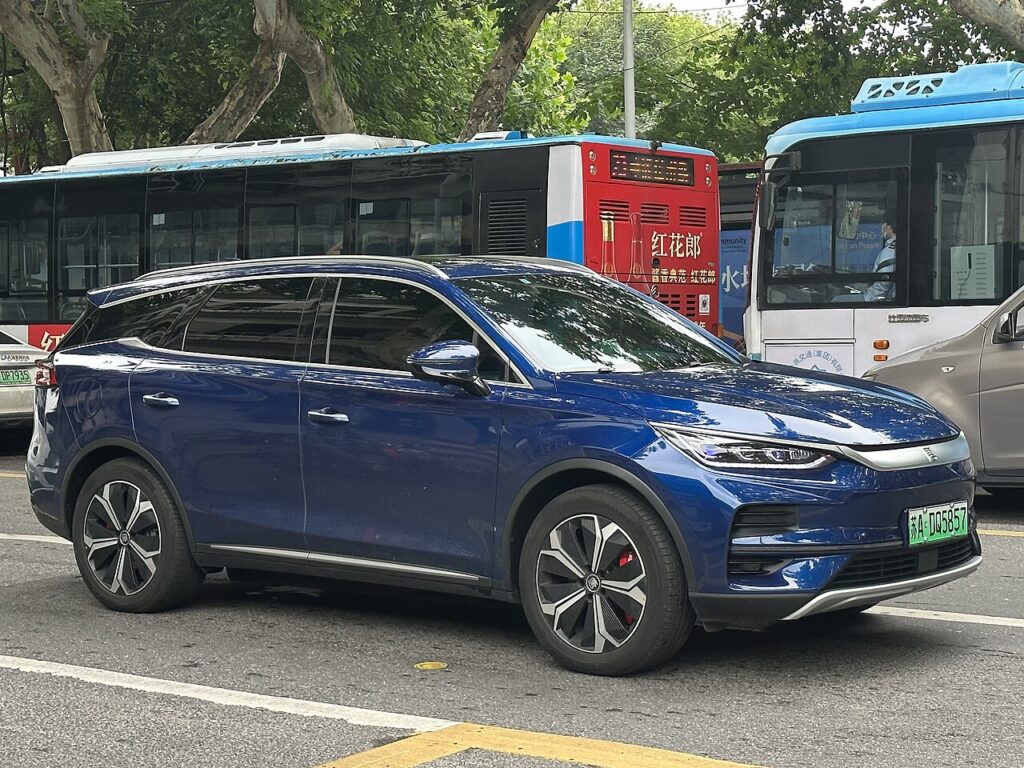
By early 2026, BYD became the largest EV manufacturer in the world by volume, selling millions of electric cars annually across Asia, Europe, and South America.
So the obvious questions follow:
- Why can they sell an EV for $12,000?
- Why can’t you buy one here?
- And why does this matter to your next car purchase?
1. The “Secret Sauce”: They Own the Kitchen
The reason Chinese EVs are so inexpensive isn’t just lower labor costs. The real advantage is vertical integration.
The Analogy:
Most automakers are like bakers who buy flour, sugar, and eggs from other companies.
BYD owns the wheat fields, the grain mills, and the ovens.
They manufacture:
- Their own batteries
- Their own battery materials
- Their own electric motors
- Much of their own electronics
This matters because the battery alone accounts for roughly 40% of an EV’s cost. When you don’t have to buy it from someone else, the entire car gets dramatically cheaper.
The result: EVs that are simpler, well-built, and affordable—not because corners were cut, but because fewer middlemen were involved.
2. A Quick Reality Check on Quality and Safety
A $12,000 car sounds suspiciously cheap—so let’s address the obvious concern.
These vehicles:
- Meet modern safety standards in the markets where they’re sold
- Are driven daily by millions of families
- Are not experimental or “beta” products
They’re not luxury cars. They’re practical, city-focused vehicles designed for affordability and durability—much like early Toyota Corollas or Honda Civics were decades ago.
Cheap doesn’t automatically mean unsafe. It often just means efficiently designed for a specific use case.
3. The “Wall”: Why You Can’t Buy One (Yet)
If these cars are real and proven, why aren’t they on your local lot?
The short answer: tariffs.
Between 2024 and 2025, the U.S. and Canada implemented tariffs of roughly 100% on Chinese-made EVs.
What that means in practice:
- A $12,000 car instantly becomes a $24,000 car at the port
- At that price, it loses its main advantage
Governments did this to:
- Protect domestic manufacturing jobs
- Give North American and European automakers time to scale up and compete
This isn’t a value judgment—it’s just the current policy reality.
4. The “China Effect”: How You Win Anyway
Here’s the part that directly affects you.
Even behind a tariff wall, Chinese EVs have completely reset global expectations.
Because companies like BYD proved that affordable EVs are possible:
- Tesla accelerated price cuts
- GM revived affordable EV programs
- Hyundai and Kia doubled down on value-focused models
In 2022:
A “budget” EV cost $45,000.
In 2026:
We have credible, mass-market EVs at $25,000—and used ones under $20,000.
This is the China Effect:
You don’t have to buy the product to benefit from the competition it creates.
Global pressure forced automakers everywhere to:
- Simplify designs
- Reduce margins
- Improve battery chemistry
- Stop treating EVs as luxury toys
Jargon, Simplified: LFP Batteries
You’ll often hear about LFP (Lithium Iron Phosphate) batteries when discussing Chinese EVs.
Think of battery chemistry like a recipe.
Why LFP matters:
- Cheaper to make
- Extremely durable (thousands of charge cycles)
- Very stable and fire-resistant
The trade-offs:
- Slightly heavier
- Slightly worse performance in extreme cold
The 2026 reality:
Most affordable EVs sold today—regardless of brand—use LFP batteries because they’re safe, long-lasting, and cost-effective.
This isn’t “Chinese tech” anymore. It’s global standard practice.
The 2026 Global EV Landscape (At a Glance)
| Brand | Origin | Why They Matter in 2026 |
|---|---|---|
| BYD | China | Set the global benchmark for affordability |
| Xiaomi | China | A consumer-tech company that built a car, showing how mature EV platforms have become |
| Tesla | USA | Still leads in software and charging—but under heavy price pressure |
| Hyundai / Kia | Korea | The “Goldilocks” brands: advanced tech without buying into hype |
What This Means for Your Next Car
You don’t need to follow geopolitics to understand this shift.
Here’s the takeaway:
- EV prices are no longer artificially high
- Waiting lists are gone
- Discounts and incentives are normal again
If you’re shopping in 2026, you’re buying in a buyer’s market—one shaped by global competition, whether you see it or not.
The Bottom Line
The EV world is in the middle of a quiet price revolution.
While headlines focus on trade disputes and tariffs, the practical outcome is simple:
- Better cars
- Better batteries
- Lower prices
You may never drive a $12,000 Chinese EV—but its existence is one of the main reasons your next electric car is finally affordable.
The “Golden Age” of value EVs didn’t arrive by accident.
It arrived because competition showed what was possible.
💬 Let’s Chat
If tariffs disappeared tomorrow, would you buy a $12,000 EV from a brand you’ve never heard of?
Or would you pay $10,000 more for a familiar badge like Ford or Chevy?
Tell me in the comments:
Are you a Brand Loyalist or a Bargain Hunter?
Next Post: No Garage? No Problem: How to Own an EV While Living in an Apartment
Pingback: 5. How to Buy a Used EV Without Inheriting a “Dead” Battery - Clarified Understanding